
Below are the courses we can currently offer your organization, if there is a course you are interested in that is not currently on our list, please reach out to discuss the details and we will do our best to accommodate your organisation needs.

W(Wheels), T(Tracks) & R(Rollers) Certifications
Train your staff to operate special-type vehicles that aren’t a forklift.
Trainees will undergo formal in class assessment in association with the unit standard/s followed by a short practical assessment drive.
More Details
- The W endorsement is for vehicles that run on wheels that aren’t forklifts, passenger vehicles, tractors, fire engines, trade vehicles or vehicle recovery service vehicles.
- The T endorsement is for vehicles that run on self-laying tracks.
- The R endorsement is for vehicles that run on rollers.
ENTRY CRITERIA
Attendees must hold a current New Zealand full Class 1 driver license.
ATTENDANCE NUMBERS
Minimum – 6
Maximum – 8

Duration
…

Price
…

Forklift
Equip your staff with the knowledge and practical skills required for the operation of a forklift.
More Details
- Pre-operational inspections.
- Start-up and shutdown procedures.
- demonstrating effective and safe forklift handling techniques.
ENTRY CRITERIA
Attendees must be aged 15 years or over.
ATTENDANCE NUMBERS
Minimum – 8
Maximum – 10
Duration
…
Price
…
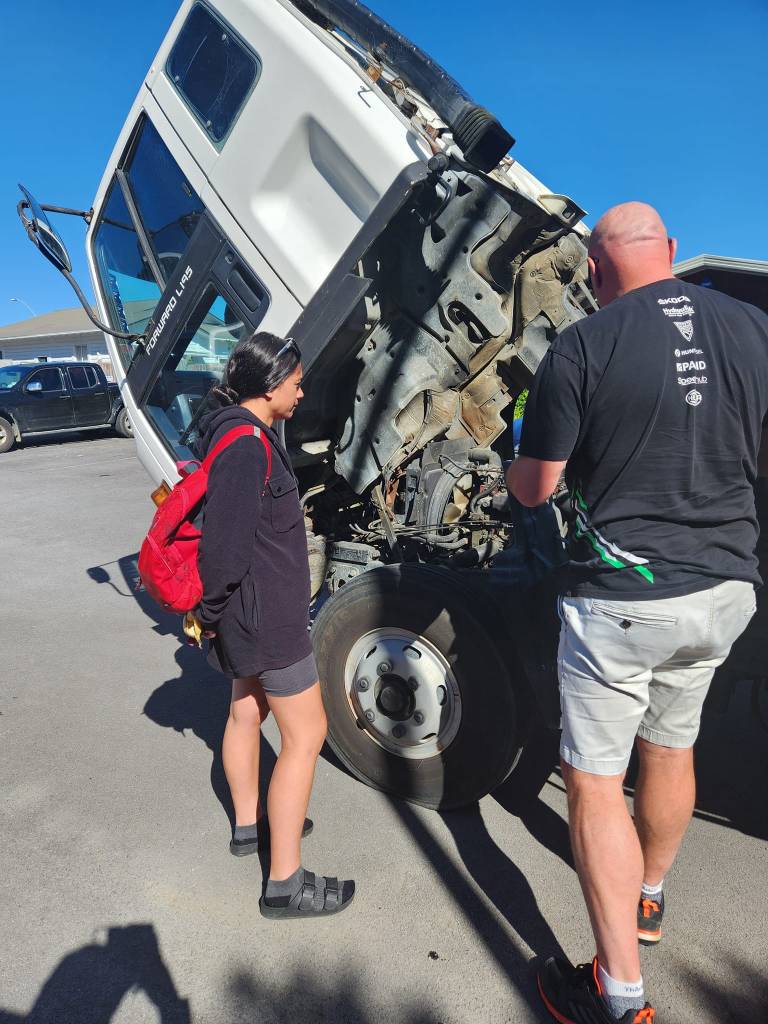
Class 2, 4, & 5 Licensing
Equip your staff with the knowledge, skill and attributes for all essential areas of the units of competency covered in either Class 2, Class 4 or Class 5 vehicle course undertaken, enabling the individual to drive effectively and safely.
More Details
CLASS 2
People credited with this unit standard are able to:
- Identify driving hazards associated with a rigid vehicle and describe measures to reduce the risks associated with the identified hazards.
- Describe requirements relating to safe loading of a rigid vehicle and driving techniques that minimise the adverse effects of a high centre of gravity.
- Carry out a pre-use walk-around inspection of a rigid vehicle.
- Drive a rigid vehicle efficiently in different traffic and road conditions.
- Manoeuvre a rigid vehicle in reverse; park, shut down, and secure a rigid vehicle.
- Complete driver logbook entries.
CLASS 4
People credited with this unit standard are able to:
- Identify driving hazards associated with a rigid vehicle and describe measures to reduce the risks associated with the identified hazards.
- Describe requirements relating to safe loading of a rigid vehicle and driving techniques that minimise the adverse effects of a high centre of gravity.
- Carry out a pre-use walk-around inspection of a rigid vehicle.
- Drive a rigid vehicle efficiently in different traffic and road conditions.
- Manoeuvre a rigid vehicle in reverse.
- Park, shut down, and secure a rigid vehicle.
- Complete driver logbook entries.
CLASS 5
People credited with this unit standard are able to:
- Describe night driving hazards.
- Describe requirements relating to safe loading of a combination vehicle and driving techniques that minimise the adverse effects of a high centre of gravity.
- Connect a trailer to the prime mover.
- Carry out a pre-use walk-around inspection of a combination vehicle.
- Drive a combination vehicle efficiently in different traffic and road conditions.
- Manoeuvre a combination vehicle in reverse.
- Park, shut down, and secure separately the trailer and prime mover of a combination vehicle.
- Complete driver logbook entries.
ENTRY CRITERIA
Attendees must have sufficient English to be confident in being assessed under exam like conditions.
Class 5: requires a level of fitness to demonstrate competency for the skill being trained.
ATTENDANCE NUMBERS
Minimum – 3
Maximum – 3 (C2) 5(C4,C5)
Duration
…
Price
…

CV building and Pathways to work
Discover potential Pathways and learn how to build up your CV.
Duration
…
Price
…
D Endorsement (Dangerous goods)
The aim of this course is to produce a Dangerous Goods driver that will have the knowledge, skills and awareness for all essential areas of the units of competency covered in the course undertaken.
The Dangerous Goods driver will learn the legislative requirements pertaining to them when transporting “Dangerous Goods” as determined by Land Transport NZ.
More Details
- If you’re transporting dangerous goods, you usually need to have a Dangerous Goods (D) Endorsement on your driver licence. A lot depends on what you’re transporting, how much of it and under what circumstances.
- If you’re transporting dangerous goods for hire or reward (e.g. if you’re a transport operator or a courier), you will usually need a D Endorsement. There are some exceptions, which are listed in clause 9.2 of Land Transport Rule: Dangerous Goods 2005 and Land Transport Rule: Dangerous Goods Amendment 2010. Together these rules contain the current requirements in the Dangerous Goods Rule (the Rule).
- If you’re transporting dangerous goods as tools-of-trade and the quantities are under the limits in schedule 1 of the Dangerous Goods Rule, you don’t need a D Endorsement.
- If you’re transporting dangerous goods as tools-of-trade in quantities that are over the limits in schedule 1, you will need a D Endorsement, except for dangerous goods that are toxic to the aquatic environment and classified as UN3077 or UN3082, environmentally hazardous substances.
- If you’re transporting dangerous goods for domestic or recreational purposes, you don’t need a D Endorsement.
COURSE OBJECTIVE
People credited with this unit standard are able to:
- Identify the scope of the Rule.
- Identify driver and loader responsibilities relating to the transport of dangerous goods.
- Identify and explain documentation requirements relating to the transport of dangerous goods.
- Identify the requirements for packages containing Dangerous Goods in Limited Quantities (DGLQ), consumer commodities,
small packages, and accepted packages. - Demonstrate knowledge of segregation requirements and segregate dangerous goods.
- Demonstrate knowledge of placarding requirements and placard vehicles and freight containers containing dangerous goods.
- Identify driver actions and considerations in the event of an incident or emergency.
ENTRY CRITERIA
Attendees must have sufficient English to be confident in being assessed under exam like conditions.
ATTENDANCE NUMBERS
Minimum – 8
Maximum – 10
Duration
…
Price
…
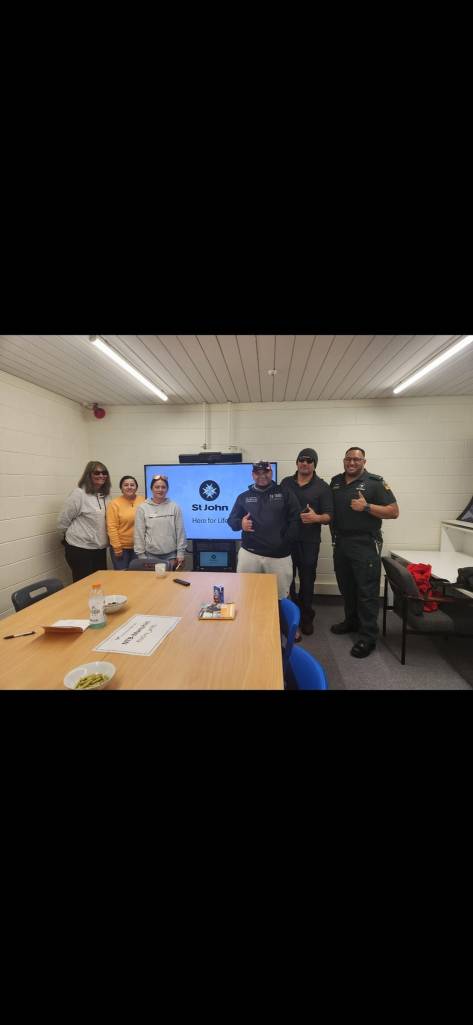
First Aid Courses
Train your staff to be capable of managing an emergency situation and administer first aid in order to preserve life, promote recovery and prevent conditions from worsening.
This course contains theory and practical assessments covering the following.
More Details
- AED use and practice.
- Choking -conscious and unconscious
- CPR
- Overview of HSW regulations relating to accidents in the workplace.
- Primary and scene assessment and management.
- Shock and the recovery position.
TRAUMA TOPICS
- Basic wound care
- Burns and scalds
- External and internal bleeding
- Fractures and dislocations
- Head, neck and spinal injuries
- Soft tissue injuries (Sprains and strains).
- Thermal conditions (Hypothermia and hyperthermia).
MEDICAL TOPICS
- Allergies and anaphylactic shock.
- Breathing difficulties.
- Dealing with asthma casualties.
- Dealing with heart attack casualties.
- Heat conditions.
- Neurological conditions (Stroke and seizures).
ATTENDANCE NUMBERS
Minimum – 10
Maximum – 15
Duration
…
Price
…
 RIR Advanced